 INDIZILLA
Have an idea? Don't let it die.
Most ideas don't fail; they expire, waiting for the perfect plan, the full budget, the right moment. We build the version that can exist now: designed fast, launched small, improved in the open.
- 100% ownership, transferred on delivery and payment
- Fixed scope, visible in your proposal
- No lock-in contracts
- Reply within one business day
Digital products, end to end.
Websites and platforms
Beyond the brochure: portals, marketplaces, member areas, booking and ordering systems. Built to be operated, not just admired.
Web apps
Dashboards, internal tools, client-facing systems. The software your business runs on, shaped to how you actually work.
MVPs
The smallest version of your idea that can meet a real user. Small enough to ship in weeks, real enough to teach you something true.
Products that grow
What launches small doesn't stay small. The systems are designed so version two is an addition, not a rewrite.
Speed is a discipline, not a shortcut.
The plan is not the product. The sooner a real version meets real users, the sooner you know what you actually have, and every week saved on ceremony is a week spent learning.
A week of decisions, not a quarter of documents.
Quick systems design: what it does, who it serves, what version one leaves out.
Version one is live.v1.0
It ships when it can meet a user, not when it has every feature you might want someday. Version one's job is to exist and to teach.
Real users, real friction: lessons learned while they are still small, in week four instead of year two.
Pricing on the front page. Export promoted.v2.0
Version two is what users did with version one: evidence, not the original guess.
- 1 · Design fast
- 2 · Launch small
- 3 · Learn honestly
- 4 · Adapt quickly
- 1Design fast. Quick systems design: a week of decisions, not a quarter of documents. What it does, who it serves, what version one leaves out.
- 2Launch small. Version one's job is to exist and to teach. It ships when it can meet a user, not when it has every feature you might want someday.
- 3Learn honestly. If an idea is going to fail, better in week three than year two: early enough to change course with what you learned, not mourn what you spent.
- 4Adapt quickly. What users do with version one decides version two. Improvise, adapt, and let the product succeed on evidence, not on the original guess.
Don't get tangled in how. Tell us what.
You shouldn't need to know your stack from your schema to get a product built. Describe the outcome, who it's for, what it should do, what success looks like, and the technical decisions become our responsibility, made visibly and explained in plain English.
- You describe the what. We own the how.
- Scope and figure fixed in your proposal, before anything begins.
- Progress you can see: a working thing, not a status report.
- Every login, repo and account transfers to you on delivery and payment. Then it's yours outright.
- Plain-English explanations, as many times as it takes.
We build our own advice.
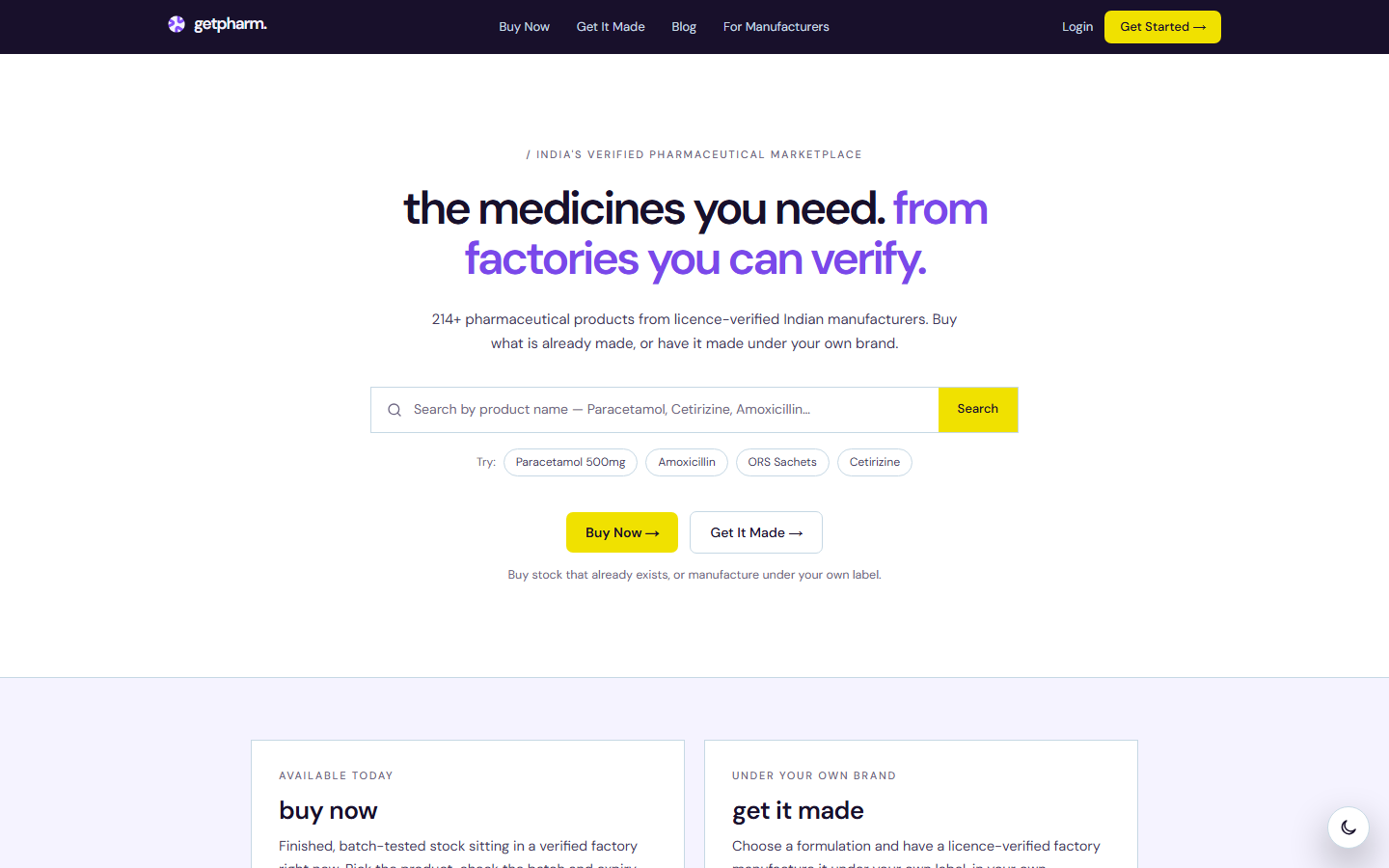
Systems design first, screens second. The market's two real journeys, buy an existing product or get one manufactured under your own brand, became the core of the platform. Brand identity, information architecture and the product itself, shipped end to end. In a trust-poor category, verification is the product.
Live at getpharm.inTest it before you build it.
Indizilla Research puts your idea in front of a simulated panel and returns a decision memo: the verdict, the strongest objection, and the one test worth running next. Some ideas earn the build. Some earn a rethink first. Both are wins.
"The expensive mistake isn't building the wrong version one. It's spending a year on it."Why we launch small
Tell us the what.
A few lines about the idea is enough: who it's for and what it should do. You'll get back a scoped proposal: version one, the figure, the timeline.